
Modernizing Business Operations for Speed, Visibility & Intelligence
Overview
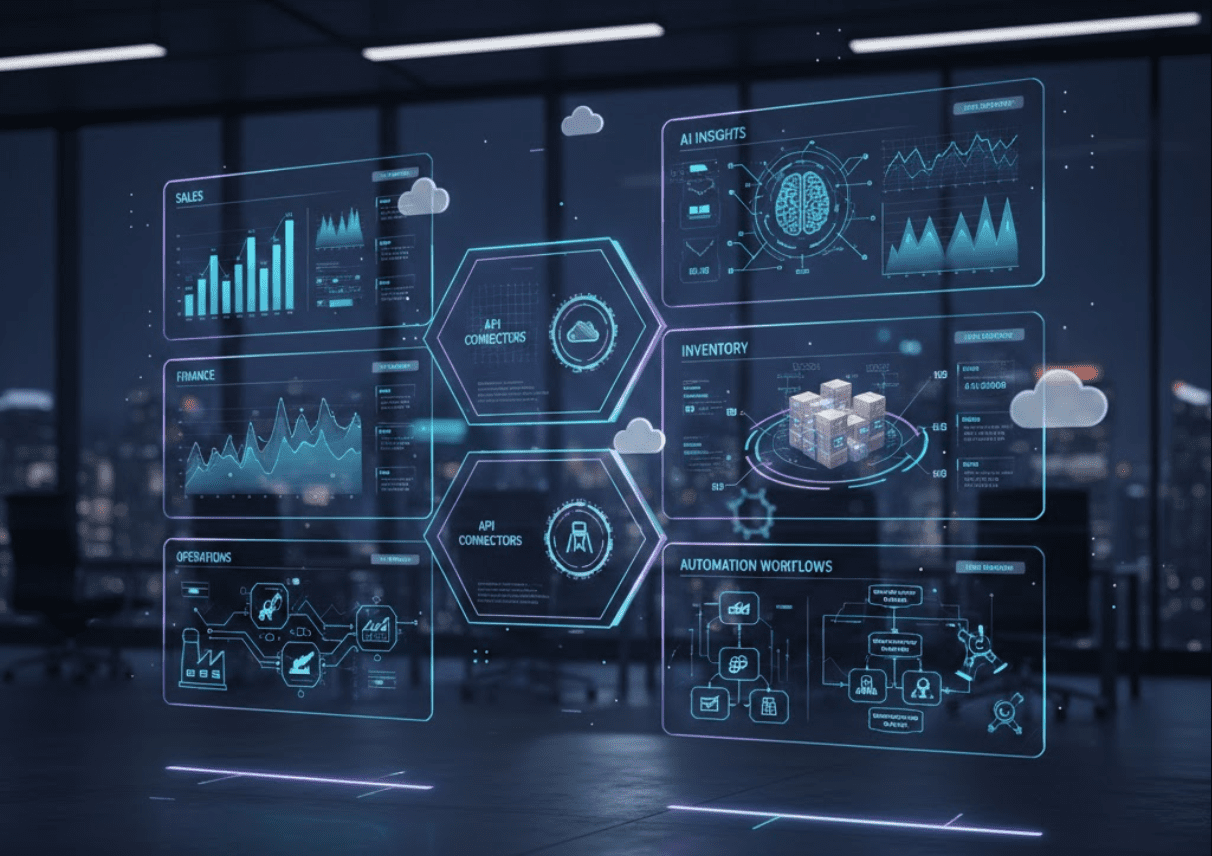
CRM & ERP Modernization have shifted from simple operational tools to strategic coordination systems. In 2026, enterprise execution depends on how well sales, operations, finance, supply chain, and customer experience sync in real time. Modern CRM/ERP platforms must integrate clean data, adaptive workflows, API-first architecture, automation, and increasingly—AI-driven intelligence.
At MoraStack, we engineer CRM & ERP solutions that are highly modular, cloud-native, integration-ready, and adaptable for both fast-moving SaaS environments and enterprise digital transformation programs.
Client Requirements – CRM & ERP Modernization
Organizations approaching CRM & ERP modernization usually aim to:
- Consolidate fragmented systems & manual processes
- Improve visibility across sales, supply chain, finance & ops
- Automate approval flows and reduce operational latency
- Enable API-based integrations for partners + vendors
- Deploy cloud-first architectures with scalable data models
- Improve reporting, forecasting & compliance
- Prepare infrastructure for AI-driven decisioning
Problems the Client Was Facing
Legacy CRM & ERP Modernization setups often create friction instead of coordination:
- Data silos across departments
- Manual workflows and spreadsheet dependencies
- Slow reporting and lack of system-wide visibility
- Minimal integration capabilities
- Poor interoperability with external tools
- No AI-assist capabilities for decision support
- Limited mobile readiness & poor UX for field teams
These constraints slow down revenue operations, procurement, and finance cycles, ultimately harming business responsiveness.
MoraStack Approach
We approach CRM & ERP engineering through 4 strategic lenses:
1. Product & Process Mapping
Understand how the business actually works before digitizing it—process, policies, and exception paths matter.
2. Modular Platform Engineering
Build layered systems (data + business logic + UX + integrations) instead of monolithic complexity.
3. Cloud-Native Infrastructure
Design for uptime, scale, and resilience using modern cloud primitives, observability, and cost controls.
4. Data + AI Readiness
Enable structured data capture, streaming context, and analytics pipelines to support predictive + prescriptive intelligence.
Methodology – CRM & ERP Modernization
Typical MoraStack implementation cycles include:
- Requirements Mapping & Workflow Discovery
- Data Model & Integration Architecture
- Custom Feature & Workflow Engineering
- Cloud Deployment (Containerized / Serverless / Hybrid)
- API & Partner Integrations
- Multi-Role UX + Mobile Enablement
- Analytics, Reporting & Forecasting Modules
- AI Assist (Phase 2): Recommendations + Smart Actions
- Observability, Logging & Compliance Configuration
- Iteration, Extensions & Continuous Optimization
The Solution
A modern CRM & ERP Modernization engineered by MoraStack enables:
- Unified data & cross-department visibility
- Automated workflows that compress cycle times
- API-first integrations for ecosystem interoperability
- Real-time metrics & forecasting dashboards
- Role-based access control (RBAC) & compliance guardrails
- Multi-device experience for field + HQ teams
- AI-assisted recommendations (inventory, sales, ops, finance)
- Lower total cost of operations vs legacy deployment
AI & Automation Layer (2026 Reality)
Modern CRM & ERP platforms benefit from embedded intelligence:
- Predictive inventory & procurement forecasting
- Lead scoring & sales prioritization
- Demand & capacity planning
- Automated approvals & compliance workflows
- Natural language query interfaces for reporting
- Pattern detection in supply chain behavior
- Anomaly alerts in finance & order ops
AI doesn’t replace operations—AI augments decisioning.
Results – CRM & ERP Modernization
With CRM & ERP modernization, organizations typically achieve measurable operational lift across revenue, finance, operations, and supply chain functions: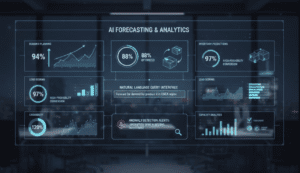
- Faster Operational Cycles
→ (15%–40% reduction in cycle times across sales, finance, supply chain & procurement) - Reduced Manual Workloads
→ (25%–55% reduction in manual tasks through workflow automation & approvals) - Increased Data Visibility & Reporting Accuracy
→ (30%–70% improvement in reporting accuracy + real-time dashboards vs batch reporting) - Improved Decision-Making Speed
→ (2×–5× faster access to forecasting, analytics & operational context) - Higher Integration Maturity
→ (API-based interoperability reduces integration latency by 20%–60%) - Lower Operational Latency
→ (10%–35% reduction in bottlenecks across revenue ops & supply chain coordination) - Higher Feature Iteration Velocity
→ (MVP → iteration cycles accelerate by 25%–45% for internal tooling + platforms) - Cost Efficiency Improvements (Cloud + Ops)
→ (10%–30% decrease in infra or ops cost via cloud-native deployments) - User Adoption & System Utilization Gains
→ (15%–50% increase in platform usage across departments post-onboarding)
Future CRM/ERP systems become coordination networks, not just operational databases—where data, automation, and AI blend to enable faster and more intelligent business responses.
MoraStack POV
For MoraStack, CRM/ERP is a systems problem, not just a software deployment problem. Success comes from aligning data models, business logic, AI workflows, and cloud infrastructure to real organizational objectives. Our teams design platforms that adapt as companies scale, evolve, and enter new markets.
Interested in CRM & ERP modernization or AI-ready transformation?
Hire MoraStack for CRM & ERP Solutions, Product Engineering & Digital Transformation.
Disclaimer
The case studies and solution examples presented are hypothetical and illustrative in nature. They are designed to demonstrate the type of services MoraStack offers, our strategic approach, and the potential results organizations can achieve. Any similarities to real companies, platforms, or outcomes are purely coincidental.
FAQs – CRM & ERP Modernization
1. What is CRM & ERP modernization?
CRM & ERP modernization upgrades legacy systems to cloud-native, integration-ready and AI-assisted architectures. The goal is to improve visibility, automation, operational speed, and scalability across finance, ops, sales, and supply chain workflows.
2. Why are CRM & ERP systems critical in 2026?
Businesses now operate in real-time environments. CRM/ERP systems coordinate cross-department execution, forecasting, billing, procurement, approvals, and supply chain decisions. Modern systems reduce latency between decision + action, which is now a strategic advantage.
3. How does AI improve CRM & ERP systems?
AI enables forecasting, anomaly detection, recommendations, automated approvals, and natural language reporting. Instead of reacting to data, companies gain predictive decisioning and proactive operational control.
4. Does modernization mean replacing legacy systems?
Not always. MoraStack often modernizes through staged migration, API-based extensions, workflow automation, and cloud overlays to avoid large-scale “rip and replace” efforts.
5. What business outcomes improve after CRM & ERP modernization?
Key improvements typically include faster cycle times, reduced manual work, better reporting accuracy, higher integration maturity, improved forecasting, and lower operational latency across supply chain + revenue operations.
6. How long does CRM/ERP modernization take?
Timelines vary by complexity and scale. Mid-size modernization may take 8–16 weeks, while enterprise programs may extend across multiple phases for integration, compliance, and operational alignment.
7. Can CRM/ERP modernization improve revenue efficiency?
Yes. Better visibility into pricing, forecasting, sales pipelines, procurement and inventory enables more accurate planning and faster execution — which increases revenue efficiency and capital utilization.
8. Who benefits most from CRM & ERP modernization?
Manufacturing, retail, logistics, D2C, SaaS, distribution, finance, and multi-location businesses typically see the highest impact due to operational complexity and cross-department coordination.
9. How does MoraStack approach CRM & ERP modernization?
MoraStack uses a product-engineering approach focusing on workflows, data models, integrations, cloud infrastructure, and AI readiness. We align the platform with real business operations rather than abstract software checklists.
10. Is full replacement required to enable AI features?
No. AI can be layered through APIs, data pipelines, and context models without replacing entire systems. The key requirement is structured data and integration pathways.