
Engineering Transformation for a Workflow Automation Platform
Overview
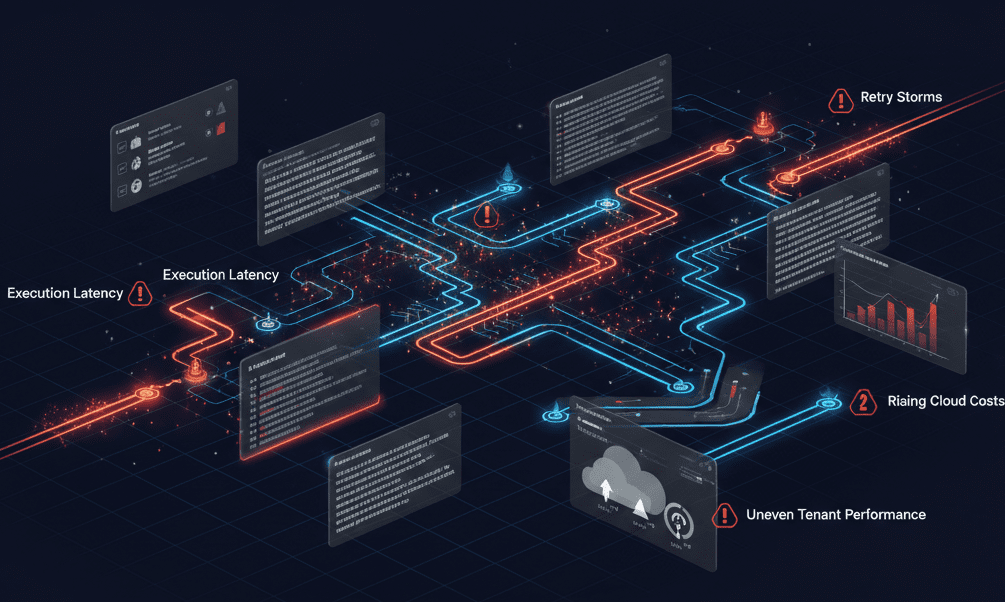
A growing Workflow Automation Engineering SaaS platform serving mid-size enterprises was expanding rapidly as organizations automated more operational tasks. The platform handled complex workflow rules, real-time execution triggers, and integrations with third-party systems all requiring high backend stability and reliable orchestration. As enterprise adoption increased, the platform experienced scalability limits, execution latency, and reliability gaps affecting automation runs and user satisfaction.
Client Requirements – Automation Engineering Solution
The client needed a scalable backend foundation, faster workflow orchestration engine, cost-efficient cloud infrastructure, and DevOps processes supporting continuous releases. They also needed improved system reliability, observability, and security documentation to onboard enterprise clients and satisfy compliance needs.
Problems the Client Was Facing
Despite gaining traction, the Workflow Automation platform encountered significant technical pain points:
- Workflow execution slowed under heavy concurrency
- API throughput degraded during intensive scheduling cycles
- Multi-tenant loads created inconsistent performance across accounts
- Cloud resource costs increased rapidly due to inefficient compute usage
- Manual deployments caused outages and slowed feature delivery
- Limited observability made workflow failures difficult to trace
- Third-party API integrations increased error handling complexity
These performance constraints impacted enterprise demos, slowed onboarding, and reduced confidence during mission-critical automation cycles.
MoraStack Approach – Automation Engineering Solution
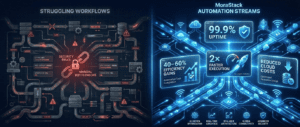
To ensure sustainable scale and platform reliability, MoraStack developed an engineering roadmap centered on performance optimization, infrastructure modernization, and workflow orchestration enhancements.
Our approach included:
- Engineering a scalable workflow orchestration engine
- Implementing multi-tenant workload isolation
- Modernizing cloud infrastructure for cost efficiency and elasticity
- Establishing CI/CD automation for consistent releases
- Enhancing security for enterprise compliance
- Assigning dedicated engineers as an extension of the client’s team
Methodology – Automation Engineering Solution
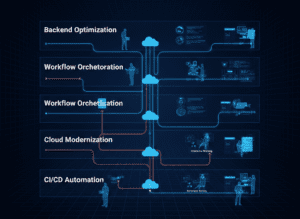
The solution followed a structured methodology targeting both backend performance and cloud reliability.
Execution Steps:
- System Audit: End-to-end review of codebase, orchestration engine, cloud cost breakdown, logs, and integration layers
- Backend Optimization: Refactored workflow handlers, scheduling policies, API layers, caching, and database queries
- Cloud Modernization: Introduced containerization, autoscaling, and compute optimization
- Execution Engine Enhancements: Improved task queues, concurrency handling, retry logic, and error pathways
- DevOps Implementation: Built CI/CD pipelines enabling automated testing, deployment, and rollback
- Monitoring & Visibility: Added dashboards, logs, traces, alerts, and workflow-level observability
- Engineering Support: Embedded backend + cloud engineers to drive continuous improvements
The Solution – Automation Engineering
MoraStack delivered a full technical modernization of the platform’s engineering foundation.
Key solution components included:
- High-performance workflow orchestration engine for parallel execution
- Modernized cloud infrastructure with autoscaling and efficient container workloads
- Automated CI/CD pipelines enabling reliable, frequent deployments
- Real-time monitoring for workflow execution, API throughput, and error traces
- Compliance-ready security and documentation for enterprise onboarding
- Multi-tenant, scalable architecture optimized for enterprise-scale automation
Results – Automation Engineering Solution
Results were visible immediately. Workflow execution cycles became faster, API performance stabilized, cloud costs reduced due to resource optimization, and developer release cycles accelerated. With a stronger engineering foundation, the platform achieved higher uptime, more predictable automation runs, and better enterprise engagement during onboarding demos.
Projected Impact
With modernization in place, the platform is now positioned for long-term stability and operational scalability.
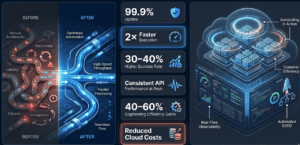
Projected outcomes include:
- 99.9% uptime reliability during high workflow concurrency
- 2× faster execution cycles, improving automation throughput
- 30–40% higher workflow success rates, with fewer retries and failures
- Consistent API performance, even under peak scheduling loads
- 40–60% operational efficiency gains across engineering workflows
- Reduced cloud costs through autoscaling and container efficiency
If you’re building a Workflow Automation platform that requires scalability, speed, and enterprise-grade reliability, MoraStack provides the engineering backbone to support high-performance automation.
Disclaimer
This solution is hypothetical and created solely for demonstration. It illustrates MoraStack’s engineering approach and capabilities. Any resemblance to actual companies or outcomes is purely coincidental.
AEO FAQs – Workflow Automation Engineering Solution
What engineering challenges do Workflow Automation platforms face as they scale?
They encounter concurrency bottlenecks, scheduling delays, API saturation, cloud cost spikes, and multi-tenant performance issues.
How does MoraStack improve workflow execution performance
Through backend optimization, orchestration enhancements, queue management, caching, and cloud modernization.
Why is multi-tenant workload isolation important for automation platforms?
It ensures predictable performance across customer accounts during peak workload cycles.
How can cloud modernization reduce costs for workflow automation platforms?
Autoscaling, containerization, and efficient compute allocation reduce resource waste and infrastructure costs.
What role does CI/CD play in automation platform releases?
CI/CD enables stable, frequent releases and reduces deployment risk and downtime.
How do workflow platforms achieve 99.9% uptime in enterprise environments?
Through redundancy, autoscaling, monitoring, resilient orchestration, and hardened error pathways.
Why work with an engineering-focused team like MoraStack?
To ensure workflow platforms are reliable, scalable, cloud-efficient, and enterprise-ready with continuous engineering support.