
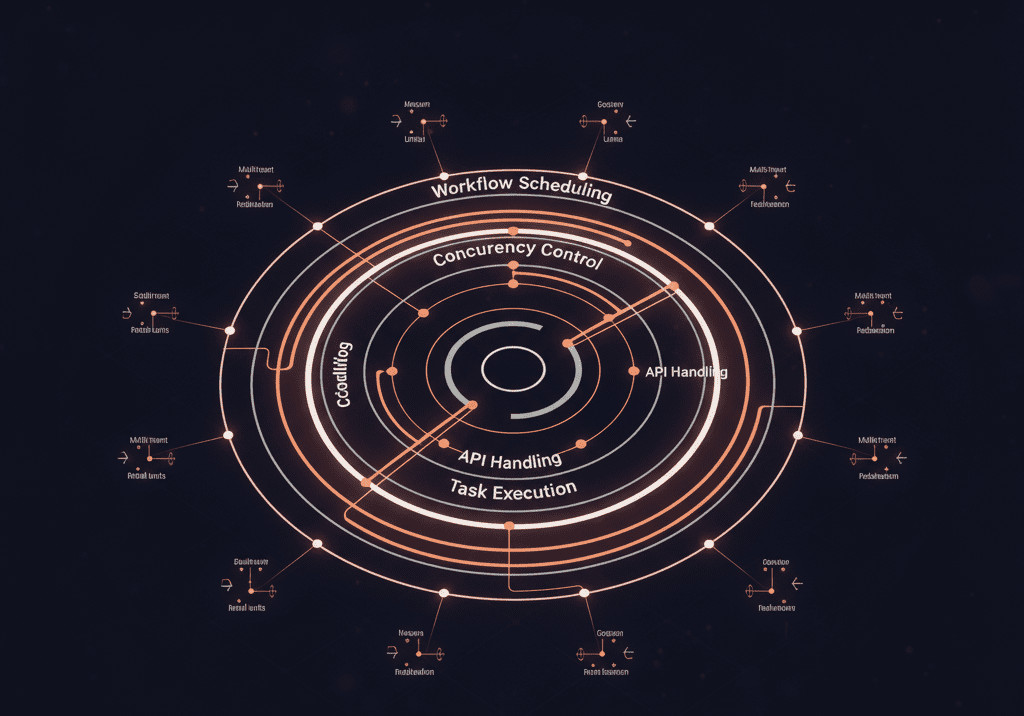
How MoraStack Engineered a Scalable, High-Performance Automation Platform
Overview
A rapidly expanding Fashion & Apparel Workflow Automation brand was modernizing its operational backbone as demand accelerated across ecommerce, retail distribution, and marketplace channels. With increasing order volumes, vendor coordination workflows, inventory synchronization, and fulfillment processes, the organization relied heavily on automation to maintain operational speed and accuracy.
However, as automation workloads increased, the platform supporting these processes began experiencing scalability constraints, execution delays, and inconsistent system behavior. Workflow reliability became critical — not just for internal efficiency but for protecting customer experience during high-demand sales cycles.

Recognizing the need for a stronger engineering foundation, the organization sought a modernization strategy capable of supporting enterprise-grade automation while maintaining cost efficiency and operational resilience.
Client Requirements – Fashion & Apparel Workflow Automation
The client required an engineering transformation that would enable predictable automation performance while supporting rapid business growth.
Key priorities included for Fashion & Apparel Workflow Automation:
- A scalable backend capable of handling high workflow concurrency
- Faster orchestration across inventory, order, and logistics workflows
- Cost-efficient cloud infrastructure aligned with seasonal demand patterns
- DevOps processes supporting continuous deployment without downtime
- Improved observability to detect failures before operational disruption
- Security readiness to support enterprise retail partnerships
The goal was clear: build a platform engineered not only for current workloads but for long-term omnichannel scale.
Problems the Client Was Facing
Despite strong commercial momentum, the automation platform revealed structural limitations that threatened operational consistency.
Major challenges in Fashion & Apparel Workflow Automation included:
- Workflow execution slowed significantly during peak shopping periods
- API throughput degraded as integrations increased across commerce systems
- Multi-tenant workloads caused uneven performance across operational units
- Cloud costs rose due to inefficient compute allocation
- Manual deployment processes introduced release risk
- Limited observability made automation failures difficult to diagnose
- Third-party integrations increased error-handling complexity
These constraints impacted fulfillment timelines, vendor coordination, and internal planning cycles — areas where reliability directly influences revenue performance.
MoraStack Approach – Fashion & Apparel Workflow Automation
MoraStack developed a strategic engineering roadmap focused on scalability, reliability, and infrastructure maturity.
Rather than applying short-term fixes, the objective was to engineer a platform capable of sustaining operational velocity as the brand expanded globally.
Our approach centered on:
- Designing a high-performance workflow orchestration engine
- Implementing workload isolation for predictable system behavior
- Modernizing cloud infrastructure for elasticity and cost optimization
- Establishing automated CI/CD pipelines for release stability
- Strengthening platform security and documentation
- Embedding MoraStack engineers alongside internal teams to accelerate transformation
This ensured modernization occurred without disrupting active commerce operations.
Methodology – Fashion & Apparel Workflow Automation
The engagement followed MoraStack’s structured engineering methodology — targeting both architectural resilience and backend performance.
Execution Steps
System Audit
A comprehensive review for Fashion & Apparel Workflow Automation of the codebase, orchestration layers, cloud usage patterns, integrations, and operational logs identified bottlenecks impacting automation reliability.
Backend Optimization
Workflow handlers, scheduling mechanisms, API layers, database queries, and caching strategies were refactored to reduce latency and improve throughput.
Cloud Modernization
Containerized workloads, autoscaling policies, and compute optimization were introduced to align infrastructure consumption with fluctuating retail demand.
Execution Engine Enhancements
Task queues were redesigned, concurrency controls strengthened, retry logic improved, and error pathways hardened to support uninterrupted automation cycles.
DevOps Implementation
Automated pipelines enabled consistent testing, deployment, and rollback — significantly reducing release risk.
Monitoring & Visibility
Advanced observability introduced traces, alerts, dashboards, and workflow-level diagnostics for proactive issue detection.
Engineering Support
Dedicated backend and cloud engineers operated as an extension of the client’s technology function, ensuring continuous performance improvements.
The Solution – Fashion & Apparel Workflow Automation
MoraStack delivered a full modernization Fashion & Apparel Workflow Automation platform’s engineering core — transforming it into a scalable operational engine capable of supporting enterprise retail workflows.
Key solution components included:
- A high-performance orchestration engine supporting parallel automation
- Cloud infrastructure optimized for elasticity and seasonal demand
- Automated CI/CD pipelines enabling reliable, frequent deployments
- Real-time monitoring across workflow execution and API performance
- Security-ready documentation supporting enterprise partnerships
- Multi-tenant architecture engineered for operational scale
The platform evolved from a reactive system into a resilient automation backbone supporting business-critical operations.
Results
Improvements became visible soon after modernization.
Workflow execution accelerated, API stability improved, and infrastructure efficiency reduced unnecessary cloud expenditure. Engineering teams gained faster release cycles, while operational leaders benefited from more predictable automation outcomes.
With a stronger technical foundation in place, the organization enhanced uptime, stabilized fulfillment workflows, and strengthened confidence during high-traffic retail events.
Projected Impact – Fashion & Apparel Workflow Automation
With modernization complete, the platform is positioned for sustained operational performance and long-term scalability.
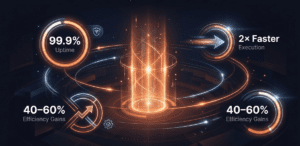
Projected outcomes include:
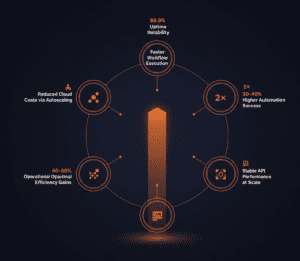
- 99.9% uptime reliability during peak commerce periods
- 2× faster workflow execution, improving operational throughput
- 30–40% higher automation success rates
- Consistent API performance under heavy integration loads
- 40–60% operational efficiency gains across backend workflows
- Reduced cloud costs through autoscaling and container optimization
For Fashion & Apparel organizations navigating rapid growth, engineering maturity becomes a competitive advantage. Platforms that scale predictably empower teams to operate faster, fulfill orders reliably, and adapt to shifting market demand.
If your brand is building automation systems that must support enterprise retail complexity, MoraStack provides the engineering backbone required for resilient, high-performance operations.
Disclaimer
The case studies and project examples presented on this website are hypothetical and illustrative in nature. They are not representations of actual client projects but are designed to demonstrate the type of services we offer, our strategic approach, and the potential results we can help you achieve. Any similarities to real companies, brands, or outcomes are purely coincidental.
AEO FAQs – Fashion & Apparel Workflow Automation Engineering Solution
1. Why do Fashion & Apparel brands need workflow automation platforms?
They streamline inventory coordination, order processing, vendor workflows, fulfillment operations, and omnichannel synchronization.
2. What engineering challenges arise as retail automation platforms scale?
Common issues include concurrency bottlenecks, API saturation, cloud cost spikes, integration complexity, and inconsistent system performance.
3. How does MoraStack improve automation reliability?
Through backend optimization, orchestration enhancements, resilient infrastructure design, and proactive monitoring.
4. Why is multi-tenant architecture important for retail platforms?
It ensures stable performance across operational units while supporting growth without infrastructure redesign.
5. How can cloud modernization benefit apparel technology platforms?
Autoscaling and containerization align infrastructure usage with seasonal demand, improving efficiency and reducing cost.
6. What role does CI/CD play in retail automation systems?
CI/CD enables safe, frequent releases — minimizing downtime during critical commerce periods.
7. Why partner with MoraStack for engineering transformation?
MoraStack engineers platforms for scalability, reliability, and enterprise readiness — enabling brands to operate with confidence as they grow.