
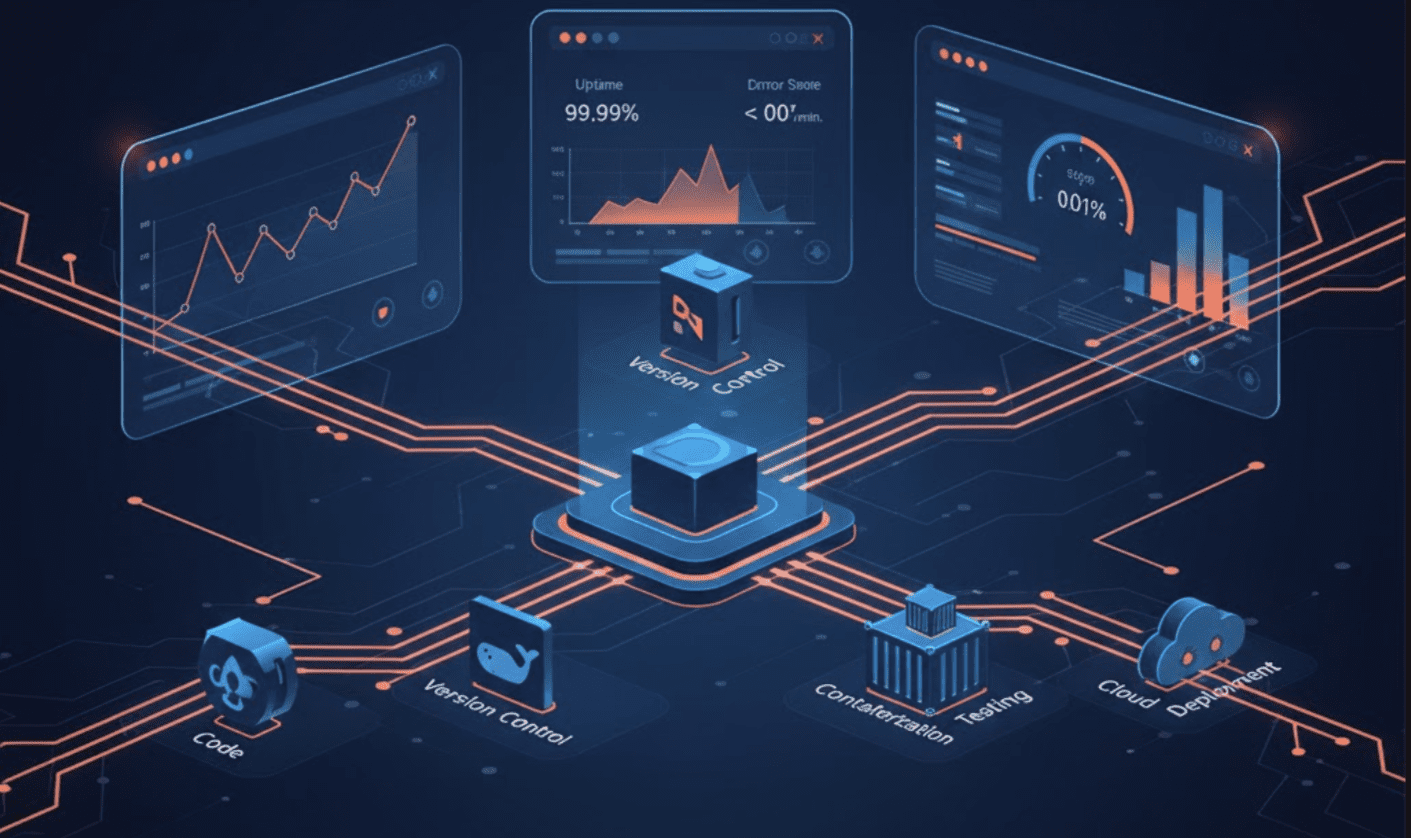
Transformation for a B2B SaaS Solution
Overview
A fast-growing B2B SaaS solution workflow automation platform serving mid-size enterprises was expanding rapidly, but its engineering systems could not keep up with the rising user load. The product handled complex data processing, automation rules, and multi-role dashboards — all requiring high stability and strong backend performance.
As enterprise signups increased, the platform began experiencing delays, scalability issues, and reliability gaps that threatened customer experience and adoption.
Client Requirements: B2B SaaS Solution
The client needed a more scalable backend system, a stronger and cost-efficient cloud environment, faster API performance, and a deployment process that supported continuous releases. They required dedicated engineers who could stabilize the product, enhance infrastructure, and prepare the platform for enterprise-level growth. Security reinforcement and detailed documentation were also mandatory for compliance.
Problems the Client Was Facing
Despite gaining market traction, the platform faced critical engineering obstacles. API response times slowed down under heavy usage, causing failed automation tasks and user frustration. Their cloud infrastructure was not designed for multi-tenant scale, resulting in performance inconsistencies across client accounts. Cloud bills were rapidly increasing due to inefficient resource allocation. Manual deployments caused delays and frequent minor outages, while limited monitoring made incident resolution slow. All of this created friction during enterprise demos and slowed down feature rollouts.
MoraStack Approach: B2B SaaS Solution
To ensure stable, long-term scalability, MoraStack designed a clear engineering roadmap focused on optimizing performance, improving reliability, and reducing technical debt.
Our Approach Included:
- Designing a scalable, multi-tenant backend architecture
- Restructuring cloud resources for controlled, predictable scaling
- Establishing DevOps automation for rapid, error-free deployments
- Enhancing security for enterprise SaaS compliance
- Embedding dedicated MoraStack engineers as an extension of the client’s team
Methodology: B2B SaaS Solution
The execution followed a structured, step-by-step methodology that targeted both backend performance and infrastructure reliability.
Step-By-Step Methodology:
- Full system audit: Reviewed codebase, infrastructure, API logic, workflows, and cloud cost distribution
- Backend optimization: Refactored slow API endpoints, reduced query load, and implemented caching strategies
- Cloud modernization: Introduced containerized micro-services, auto-scaling, and optimized compute usage
- DevOps implementation: Built CI/CD pipelines to automate deployments and reduce development friction
- Monitoring & visibility: Added dashboards, logs, and automated alerts for proactive issue detection
- Engineering support: Assigned dedicated backend and cloud engineers to ensure long-term execution
The Solution
MoraStack delivered a complete engineering upgrade that transformed the platform’s stability and performance.

The Final Solution Included:
- A high-performance backend redesigned for multi-tenant usage
- Fully modernized cloud environment with auto-scaling and optimized compute
- Automated CI/CD pipelines enabling faster and safer releases
- Real-time monitoring and logging systems for platform-wide visibility
- Strengthened security protocols aligned with SaaS standards
- Cleaner, faster, scalable architecture ready for enterprise expansion
Results: B2B SaaS Solution
The improvements were visible immediately. API response times improved substantially, giving users a seamless experience across high-load operations. Cloud costs dropped due to better resource allocation, and deployment cycles became faster and more reliable. With the new engineering foundation, the platform achieved consistent uptime, handled peak usage without slowdowns, and allowed the internal team to build and ship features faster. Enterprise clients noticed performance improvements instantly, which strengthened trust and adoption.
Projected Impact
With the upgraded engineering ecosystem, the platform is positioned for long-term reliability and scalable growth. Performance will continue to improve as user volume increases, and the new architecture supports continuous expansion with minimal adjustments.
Projected Outcomes Include:
- 99.9% uptime reliability: even during peak enterprise usage
- 2× faster development cycles: reducing feature delivery timelines
- 30–40% improvement in user retention: driven by smoother performance
- Consistent API speed: even under high transaction loads
- 40–60% operational efficiency gains: across engineering workflows
- Reduced cloud costs over time: due to optimized resource usage

If you’re building a SaaS product that needs speed, reliability, and long-term scalability, MoraStack delivers the engineering backbone your business can depend on.
Disclaimer
This solution is hypothetical and created solely for demonstration. It illustrates MoraStack’s engineering approach and capabilities. Any resemblance to actual companies or outcomes is purely coincidental.
FAQs – MoraStack B2B SaaS Solution
1. What engineering challenges do growing B2B SaaS Solution platforms face when scaling to enterprise users?
Growing B2B SaaS platforms often face backend bottlenecks, slow APIs, unreliable deployments, rising cloud costs, and architecture limitations. These issues usually stem from systems not designed for multi-tenant scale or enterprise-level traffic.
2. How does MoraStack design scalable backend architecture for multi-tenant SaaS platforms?
MoraStack designs modular, multi-tenant backend systems using scalable architecture principles, optimized data isolation, efficient API layers, and cloud-native infrastructure that supports predictable growth and enterprise reliability.
3. What causes API performance issues in high-traffic SaaS applications?
API performance issues are commonly caused by inefficient database queries, lack of caching, synchronous processing under heavy load, and backend architectures that don’t scale horizontally with user demand.
4. How can cloud modernization reduce infrastructure costs for SaaS companies?
Cloud modernization reduces costs by introducing autoscaling, containerization, optimized compute usage, and better resource allocation—ensuring companies only pay for what they actually use.
5. What role does DevOps automation play in improving B2B SaaS deployment reliability?
DevOps automation eliminates manual deployment errors by introducing CI/CD pipelines, automated testing, and rollback mechanisms, resulting in faster, safer, and more reliable software releases.
6. How does CI/CD automation help SaaS teams release features faster?
CI/CD automation streamlines the development lifecycle by automatically building, testing, and deploying code changes, allowing teams to ship updates continuously without disrupting platform stability.
7. Why is multi-tenant architecture critical for enterprise SaaS solution scalability?
Multi-tenant architecture allows a single system to serve multiple customers efficiently while maintaining performance isolation, security, and scalability—making it essential for enterprise SaaS growth.
8. How can SaaS platforms achieve 99.9% uptime during peak usage?
High uptime is achieved through autoscaling infrastructure, redundancy, proactive monitoring, automated alerts, and resilient backend architecture designed to handle traffic spikes without service disruption.
9. What operational efficiency gains can SaaS companies expect after backend and cloud optimization?
After optimization, SaaS companies typically see faster development cycles, reduced incident response time, lower operational overhead, and smoother collaboration across engineering teams.
10. Why should B2B SaaS solution startups partner with an AI-first engineering team for long-term scalability?
AI-first engineering teams design systems that are automation-ready, data-driven, and scalable by default—helping SaaS startups future-proof their platforms while supporting rapid innovation and growth.